✨ New Arrivals Just Dropped!Explore


Cordon Cherry and Plum Trees | Perfect Partners
-
In this collection, you’ll receive:
- 1 ‘Sunburst’ Cordon Cherry Tree
- 1 ‘Victoria’ Cordon Plum Tree
- Standing tall and straight to attention, cordon fruit trees certainly wouldn’t look out of place in a formal military parade. But can a soldier produce a sumptuous, ripe plum? Didn’t think so…
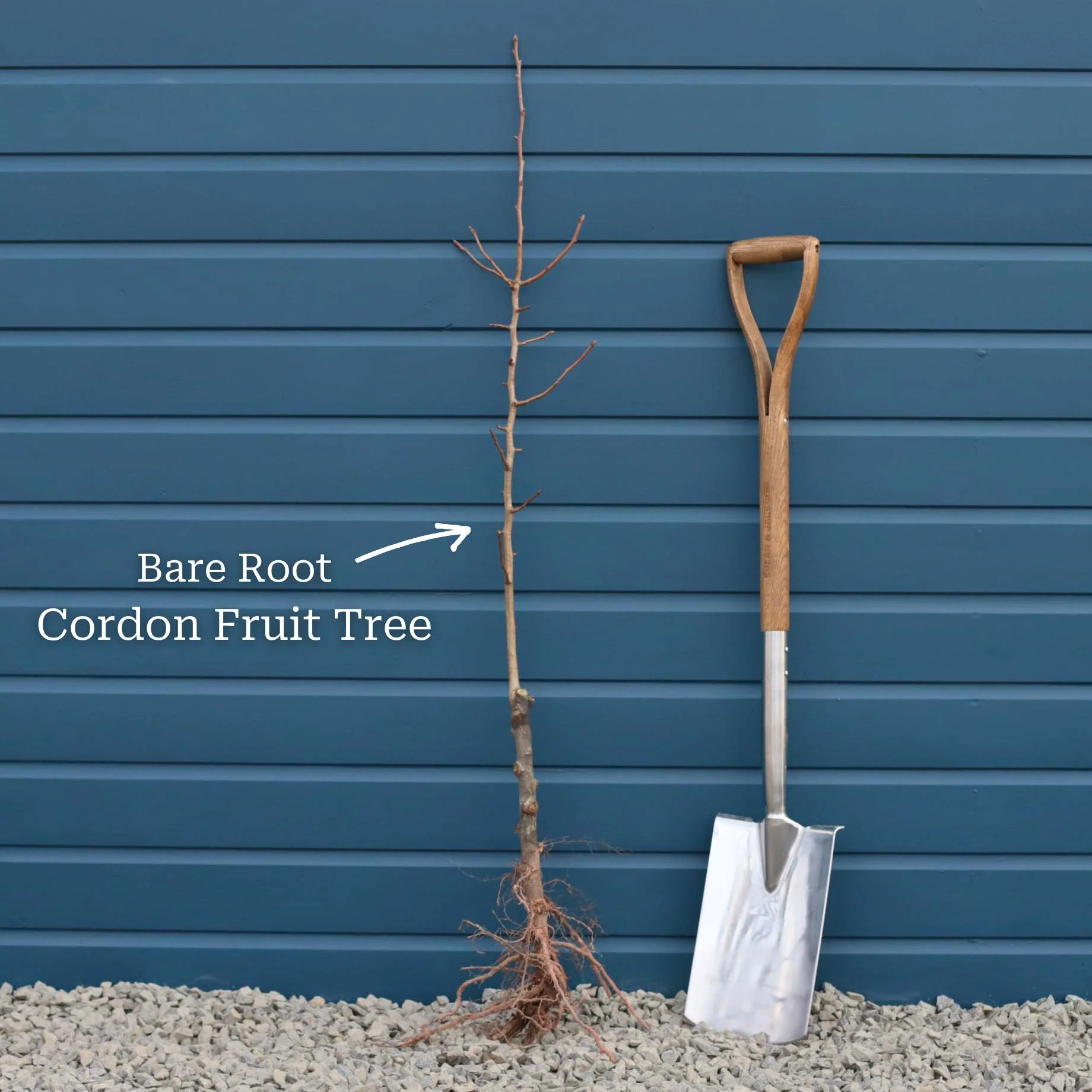
- Cordon fruit trees are trained and pruned into a single central leader from which short, fruit-bearing spurs branch off. The result is an ingenious, space-saving solution which enables you to grow a fruit tree (or two) in even small gardens.
- Although cordons were historically grown at a 45° angle against a wall, they’re nowadays just as commonly grown as a freestanding tree in a pot or the open ground. Limited space shouldn’t mean limited fruit-growing options!
- ‘Sunburst’ is a wonderful sweet cherry variety, yielding delicious dark red cherries in the heart of summer. Eat them fresh or bake them into a delicious, homemade cherry pie – the sort that would have a cartoon character floating on the wafting smell…
- ‘Victoria’ boasts delectable, juicy plums as well as an RHS Award of Garden Merit, and frankly, it’s just a bloomin’ fantastic variety (as well as being our grower John’s top recommendation).
- Our growers have carefully established the proper cordon shape for your cherry and plum trees, meaning all that’s left for you to do is give your tree a yearly prune. The bulk of the pruning should be carried out in summer, with the occasional winter prune being useful as the tree gets older. Here’s what to do:
- Towards the end of August, trim back shoots that are over 20 centimetres long, cutting them down to a single leaf beyond the basal cluster (the grouping of leaves at the base of the current year’s growth).
- If you notice your cordon’s fruiting spurs are becoming overly crowded – which sometimes happens with more mature trees – then thin out some of the less productive, older spurs (do this in the winter). Check out our article for more information.
Select Title
From $22.03
Original: $73.42
-70%Cordon Cherry and Plum Trees | Perfect Partners—
$73.42
$22.03More Images


Cordon Cherry and Plum Trees | Perfect Partners
-
In this collection, you’ll receive:
- 1 ‘Sunburst’ Cordon Cherry Tree
- 1 ‘Victoria’ Cordon Plum Tree
- Standing tall and straight to attention, cordon fruit trees certainly wouldn’t look out of place in a formal military parade. But can a soldier produce a sumptuous, ripe plum? Didn’t think so…
- Cordon fruit trees are trained and pruned into a single central leader from which short, fruit-bearing spurs branch off. The result is an ingenious, space-saving solution which enables you to grow a fruit tree (or two) in even small gardens.
- Although cordons were historically grown at a 45° angle against a wall, they’re nowadays just as commonly grown as a freestanding tree in a pot or the open ground. Limited space shouldn’t mean limited fruit-growing options!
- ‘Sunburst’ is a wonderful sweet cherry variety, yielding delicious dark red cherries in the heart of summer. Eat them fresh or bake them into a delicious, homemade cherry pie – the sort that would have a cartoon character floating on the wafting smell…
- ‘Victoria’ boasts delectable, juicy plums as well as an RHS Award of Garden Merit, and frankly, it’s just a bloomin’ fantastic variety (as well as being our grower John’s top recommendation).
- Our growers have carefully established the proper cordon shape for your cherry and plum trees, meaning all that’s left for you to do is give your tree a yearly prune. The bulk of the pruning should be carried out in summer, with the occasional winter prune being useful as the tree gets older. Here’s what to do:
- Towards the end of August, trim back shoots that are over 20 centimetres long, cutting them down to a single leaf beyond the basal cluster (the grouping of leaves at the base of the current year’s growth).
- If you notice your cordon’s fruiting spurs are becoming overly crowded – which sometimes happens with more mature trees – then thin out some of the less productive, older spurs (do this in the winter). Check out our article for more information.
Product Information
Product Information
Shipping & Returns
Shipping & Returns
Description
-
In this collection, you’ll receive:
- 1 ‘Sunburst’ Cordon Cherry Tree
- 1 ‘Victoria’ Cordon Plum Tree
- Standing tall and straight to attention, cordon fruit trees certainly wouldn’t look out of place in a formal military parade. But can a soldier produce a sumptuous, ripe plum? Didn’t think so…
- Cordon fruit trees are trained and pruned into a single central leader from which short, fruit-bearing spurs branch off. The result is an ingenious, space-saving solution which enables you to grow a fruit tree (or two) in even small gardens.
- Although cordons were historically grown at a 45° angle against a wall, they’re nowadays just as commonly grown as a freestanding tree in a pot or the open ground. Limited space shouldn’t mean limited fruit-growing options!
- ‘Sunburst’ is a wonderful sweet cherry variety, yielding delicious dark red cherries in the heart of summer. Eat them fresh or bake them into a delicious, homemade cherry pie – the sort that would have a cartoon character floating on the wafting smell…
- ‘Victoria’ boasts delectable, juicy plums as well as an RHS Award of Garden Merit, and frankly, it’s just a bloomin’ fantastic variety (as well as being our grower John’s top recommendation).
- Our growers have carefully established the proper cordon shape for your cherry and plum trees, meaning all that’s left for you to do is give your tree a yearly prune. The bulk of the pruning should be carried out in summer, with the occasional winter prune being useful as the tree gets older. Here’s what to do:
- Towards the end of August, trim back shoots that are over 20 centimetres long, cutting them down to a single leaf beyond the basal cluster (the grouping of leaves at the base of the current year’s growth).
- If you notice your cordon’s fruiting spurs are becoming overly crowded – which sometimes happens with more mature trees – then thin out some of the less productive, older spurs (do this in the winter). Check out our article for more information.