✨ New Arrivals Just Dropped!Explore

Siberian Dogwood | Cornus alba 'Sibirica'
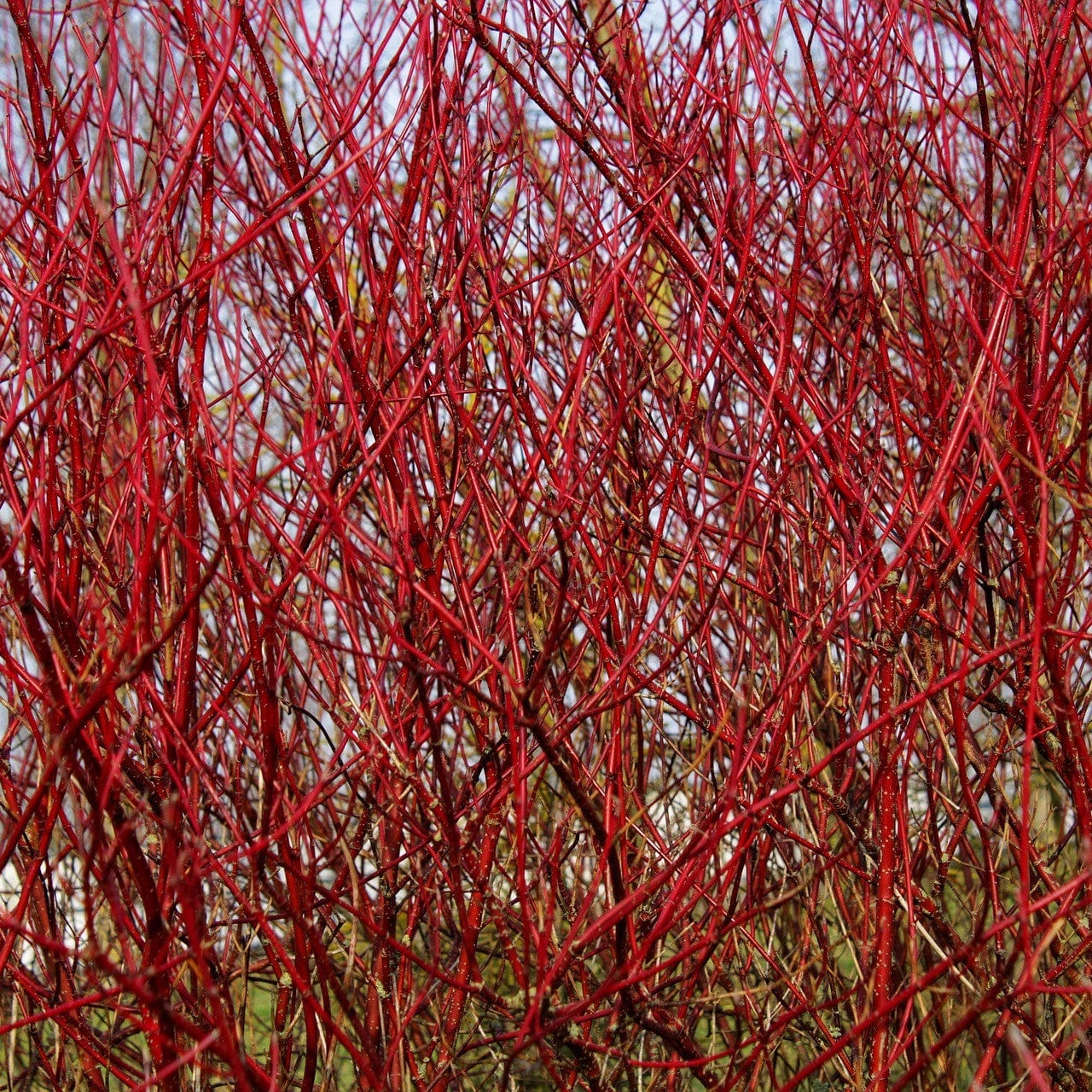
- Prepare to be captivated by Cornus alba 'Sibirica', celebrated for its spectacular, bare winter stems glowing a brilliant, striking crimson-red in the low winter sun. This characteristic ensures it stands out as a true horticultural masterpiece.
- You can rely on this dogwood to establish a vigorous, upright, and naturally thicketing growth habit. Additionally, the deciduous leaves providing fantastic, fiery autumn colour before dropping to reveal the stems guarantees this variety works hard across multiple seasons.
- You will find Cornus alba 'Sibirica' incredibly easy to establish in moist, damp, or even boggy soils, thriving in full sun to achieve the brightest winter stem colouration. Once established, it proves incredibly resilient and requires minimal ongoing maintenance.
- You can feel good knowing this dogwood supports birds eating the small autumn berries, and insects visiting the flat white summer flowers all year round. To ensure the very best colour, the stems should be coppiced or pruned hard every early spring.
- From a historical perspective, dogwood timber is exceptionally dense and was historically used to make daggers, skewers, and weaving shuttles. The name itself is widely thought to derive from 'dagwood', reflecting this fascinating, highly practical history.
$20.02
Siberian Dogwood | Cornus alba 'Sibirica'—
$20.02
Siberian Dogwood | Cornus alba 'Sibirica'
- Prepare to be captivated by Cornus alba 'Sibirica', celebrated for its spectacular, bare winter stems glowing a brilliant, striking crimson-red in the low winter sun. This characteristic ensures it stands out as a true horticultural masterpiece.
- You can rely on this dogwood to establish a vigorous, upright, and naturally thicketing growth habit. Additionally, the deciduous leaves providing fantastic, fiery autumn colour before dropping to reveal the stems guarantees this variety works hard across multiple seasons.
- You will find Cornus alba 'Sibirica' incredibly easy to establish in moist, damp, or even boggy soils, thriving in full sun to achieve the brightest winter stem colouration. Once established, it proves incredibly resilient and requires minimal ongoing maintenance.
- You can feel good knowing this dogwood supports birds eating the small autumn berries, and insects visiting the flat white summer flowers all year round. To ensure the very best colour, the stems should be coppiced or pruned hard every early spring.
- From a historical perspective, dogwood timber is exceptionally dense and was historically used to make daggers, skewers, and weaving shuttles. The name itself is widely thought to derive from 'dagwood', reflecting this fascinating, highly practical history.
Product Information
Product Information
Shipping & Returns
Shipping & Returns
Description
- Prepare to be captivated by Cornus alba 'Sibirica', celebrated for its spectacular, bare winter stems glowing a brilliant, striking crimson-red in the low winter sun. This characteristic ensures it stands out as a true horticultural masterpiece.
- You can rely on this dogwood to establish a vigorous, upright, and naturally thicketing growth habit. Additionally, the deciduous leaves providing fantastic, fiery autumn colour before dropping to reveal the stems guarantees this variety works hard across multiple seasons.
- You will find Cornus alba 'Sibirica' incredibly easy to establish in moist, damp, or even boggy soils, thriving in full sun to achieve the brightest winter stem colouration. Once established, it proves incredibly resilient and requires minimal ongoing maintenance.
- You can feel good knowing this dogwood supports birds eating the small autumn berries, and insects visiting the flat white summer flowers all year round. To ensure the very best colour, the stems should be coppiced or pruned hard every early spring.
- From a historical perspective, dogwood timber is exceptionally dense and was historically used to make daggers, skewers, and weaving shuttles. The name itself is widely thought to derive from 'dagwood', reflecting this fascinating, highly practical history.